

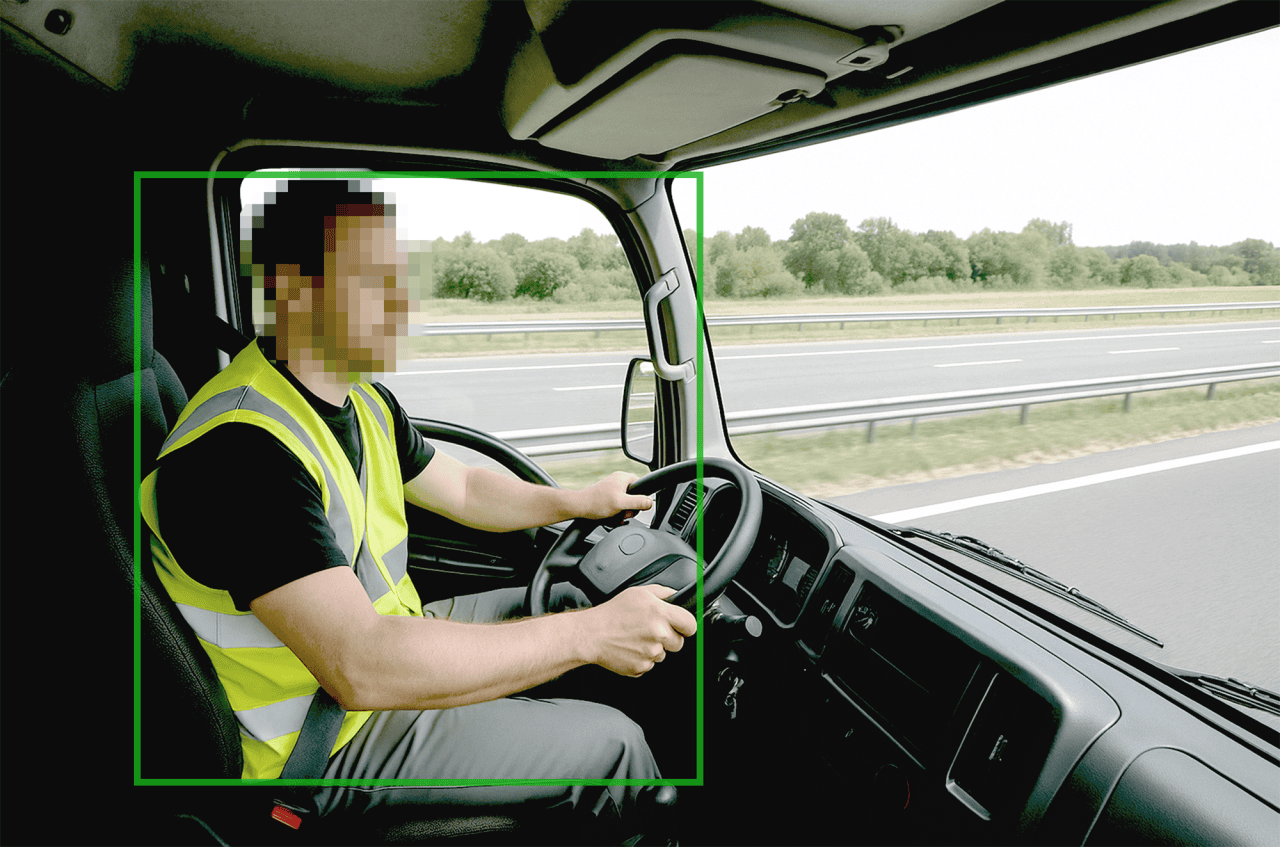
What is driver distraction monitoring with computer vision?
Driver distraction monitoring transforms in-cab and in-car video surveillance into intelligent safety insights using computer vision. The system automatically analyzes footage to detect high-risk behaviors including mobile phone use, prolonged distraction, drowsiness, and even micro-sleep episodes, that compromise road safety.
This type of monitoring can be used for analysis after the event, or live monitoring, during journeys. Unlike traditional manual video reviews, which prove impractical for fleet operations, computer vision processes hours of driving footage in minutes on return to the depot, or else live monitoring whilst driving. In both cases recorded data is analyzed through Edge devices, with Viso Suite delivering rapid, automated detection of distraction, fatigue, and unsafe driving patterns. This is particularly critical for heavy goods vehicles (HGVs), commercial truck fleets, and also rental operators, where driver behavior directly impacts safety outcomes and liability.
The technology addresses a fundamental challenge, namely understanding what actually happened directly before incidents occurred. When accidents happen, companies often lack visibility into the critical seconds or minutes that preceded the event. Driver distraction monitoring fills this gap, providing objective evidence and enabling proactive safety management, rather than a reactive response after incidents. Crucially it can also provide the ability to intervene, with a triggered alert to the depot then relayed to the driver, advising them that it is time to pull over and rest.
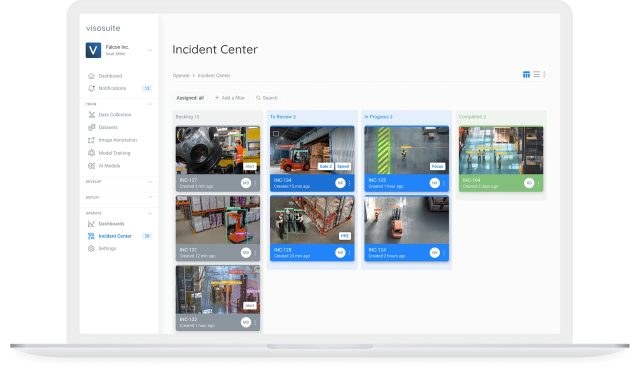
Key features of a driver distraction monitoring system
Trained models deliver precise detection of distraction indicators and fatigue signals in diverse cabin and car environments, even across variable lighting conditions.
- Multi-behavior detection automatically identifies phone handling, extended ‘wandering eyes’ (or gaze deviation), eye closure durations, yawning patterns, head position anomalies, and other distraction indicators
- Continuous behavior tracking monitors drivers throughout entire shifts, flagging distraction events with timestamps and severity levels for prioritized review by level of urgency
- Intelligent event extraction surfaces only the most relevant footage segments, eliminating the need to manually scan through hours of driving to find the most essential, critical moments
- Customizable alerting logic aggregates distraction data according to your fleet’s safety protocols and integrates seamlessly with existing fleet management, telematics, or safety platforms
- Edge AI processing ensures complete data privacy by analyzing video on-device, eliminating time-consuming, data-heavy cloud uploads, while also maintaining system robustness even in areas with poor connectivity
- Adaptive detection models work reliably across different vehicle types, cabin configurations, and driver demographics, without requiring extensive calibration

Value of driver distraction monitoring applications
Computer vision-based distraction analysis delivers scalable safety monitoring across fleets, transforming subjective safety management into data-driven operations.
- Eliminate manual review burden through fully automated behavior analysis after each drive or shift, freeing safety teams to focus on intervention rather than footage screening
- Live intervention via relayed alerts can avert potential accidents and incidents before they happen, by identification of warning signs and an alert relayed from depot to driver
- Quantifiable safety metrics track distraction frequency, duration, and trends over time, across drivers, routes, and depot locations, to measure the effectiveness of safety initiatives
- Rapid incident investigation provides immediate answers when accidents occur, revealing exactly what the driver was doing in the critical moments before impact, solving the “what actually happened” problem
- Proactive risk identification detects patterns of dangerous behavior before they result in crashes, enabling preventive coaching and intervention
- Objective performance evidence supports fair, data-backed driver coaching conversations, reduces disputes about incident circumstances, and strengthens insurance and legal positions with verifiable cabin footage
- Regulatory compliance support demonstrates due diligence in driver safety management and provides audit-ready documentation of fleet safety practices.

Who uses driver distraction monitoring systems?
Fleet safety managers: monitor distraction events across large HGV, truck and car fleet operations, conducting automated safety audits without manually reviewing thousands of hours of cabin footage from dozens or hundreds of vehicles.
Logistics and haulage companies: reduce accident rates and associated costs through early detection of high-risk driver behaviors, particularly valuable for long-haul operations where fatigue and distraction risks rise during extended driving hours.
Transport and depot managers: investigate unexplained incidents or crashes with clear evidence of in-cab and in-car conditions, finally gaining visibility into the “black box” of what happened before accidents occurred.
Vehicle rental and car-sharing providers: assess behavior of rota-based and shift drivers who may be unfamiliar with vehicles and driver accountability, supporting damage claims and insurance processes, all with objective evidence.
Driver training and development teams: move beyond generic safety training to targeted, evidence-based coaching using actual footage of specific distraction behaviors dramatically improving training effectiveness and driver engagement.
Risk and insurance departments: strengthen risk assessments, defend against fraudulent claims, and demonstrate proactive safety measures to insurers, potentially reducing premiums through verifiable safety performance data.
Health and Safety Compliance Officers: document adherence to working time directives, fatigue management policies, and safety regulations with automated, timestamped evidence of driver alertness and behavior.