

“The next frontier in computer vision is moving from perception to understanding and interaction.”
– Sanja Fidler (Director of AI at NVIDIA)
The future of visual intelligence and a quest for proof
Artificial General Intelligence (AGI) is often described as a horizon technology – a point when machines can think, learn, and act across domains as flexibly as humans. But how will we know when we’ve truly arrived?
Some believe we may already be brushing against AGI. Others argue it remains decades away. The challenge is proof. Without measurable benchmarks, the concept remains abstract.
That’s why Visual General Intelligence (VGI) matters so much. Vision offers something unique: objective, testable standards for cognition. Human visual perception has been studied extensively, with clear benchmarks for reaction time, accuracy, and contextual reasoning. By comparing machines to these metrics, we may find our clearest proof point for AGI.
In this blog, adapted from The Future of Visual Intelligence: AI Vision Through the Looking Glass, we explore why VGI is the North Star for AGI, and how the idea of a Visual Turing Test could finally give us the answer.
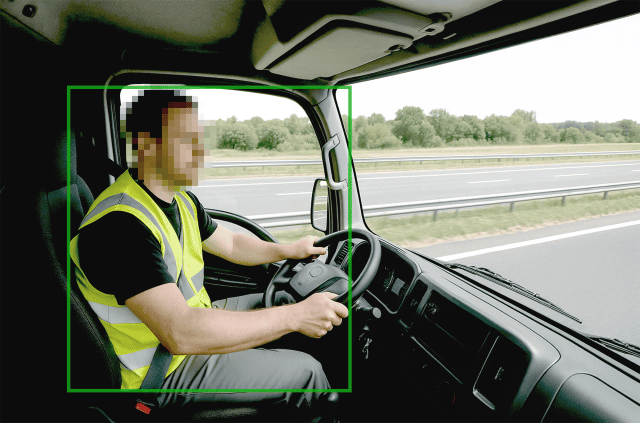
From perception to understanding
Traditional computer vision has made remarkable progress, but it remains limited: rigid rules, narrow applications, endless retraining. Even advanced systems still rely heavily on annotated data and specific use cases.
VGI changes the game by enabling systems to:
- Interpret any scene across any domain
- Apply reasoning to unfamiliar contexts
- Adapt dynamically without retraining
This leap represents not just better perception, but true understanding and interaction. Machines that can see, reason, and act in real-world environments move us closer to intelligence that rivals our own.
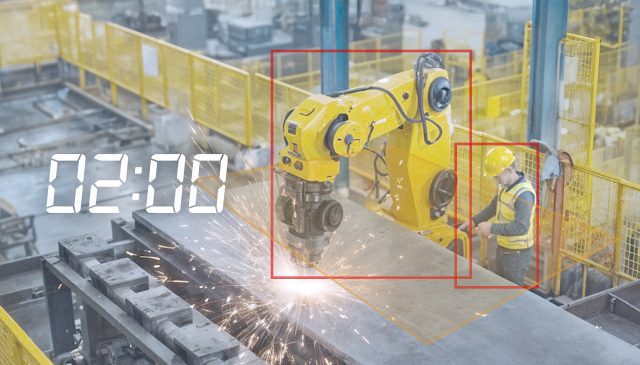
Traits of true VGI
What would it look like when VGI is achieved? Our whitepaper outlines nine defining traits:
- General visual knowledge – understanding objects, actions, and environments across domains
- Goal-directed perception – aligning visual focus with purposeful tasks
- Autonomous understanding – making independent inferences without prompts
- Context-aware perception – interpreting dynamic, real-world settings
- Visual agency – interacting with environments through perception-action loops
- Robust generalization – adapting strategies to novel scenarios and conditions
- High-level cognition – inferring intent, causality, and predicting future events
- Continual learning – updating knowledge without forgetting past experiences
- The Visual Turing Test – producing responses indistinguishable from a human observer
When machines exhibit these traits consistently, we may confidently say we’ve reached VGI.
The Visual Turing Test
Alan Turing’s famous test assessed whether machines could mimic human conversation so convincingly that we couldn’t tell the difference. A Visual Turing Test would do the same for perception.
Imagine presenting a complex video scene to both a human and a machine. If their interpretations – whether spoken, written, or acted – are indistinguishable in accuracy, abstraction, and intent, the machine has passed.
Key benchmarks might include:
- Speed – matching human neural response times (~150 ms to distinguish targets)
- Accuracy – correctly categorizing images in <300 ms
- Contextual reasoning – understanding not only what is seen, but why it matters
Such a test would mark a watershed moment: the moment machines can see and understand as we do.
Why vision, not language, leads the way
Language-based AI has captured public imagination, but vision may prove the more reliable path to AGI proof. Why?
- Richness of data – human sight processes far more information than text
- Clarity of benchmarks – perception and cognition can be objectively measured
- Universality of application – from healthcare to manufacturing, vision is critical everywhere
As Yann LeCun (Chief Scientist at Meta AI) has argued, sensory inputs, and especially visual data, are essential for AGI. Large language models alone cannot replicate the full range of human cognition. But VGI might.
Implications of proving VGI
If VGI becomes the accepted proof point of AGI, the implications are enormous:
- For industry: adoption of VGI as a general-purpose capability, reshaping safety, efficiency, and design
- For technology: a reordering of priorities, with vision at the forefront of AI research and investment
- For society: a shift from reactive systems to anticipatory intelligence, capable of preventing crises rather than merely responding
As Jeremy Michaels, Strategic Content Writer at viso, puts it:
“The question ‘Will Visual General Intelligence reshape our world?’ is missing the point: your choice is whether you lead that transformation, or if not, watch it happen to you.”
Challenges and open questions
Of course, proving VGI raises new questions:
- Could machines be trained to appear visually intelligent without truly understanding?
- How do we distinguish mimicry from genuine cognition?
- What ethical frameworks will guide systems capable of independent visual reasoning?
These challenges underscore the need for careful governance, transparent testing, and global collaboration. Proving VGI is not just a scientific milestone: it is a societal responsibility.
The strategic imperative
For businesses and nations alike, the race to VGI is not optional. The organizations that master VGI will hold a decisive edge in innovation, efficiency, and safety. Those that lag will be forced to adopt on others’ terms, or risk irrelevance.
Consider the stakes:
- Manufacturing operations that run with near-zero downtime
- Supply chains that anticipate and prevent disruptions
- Healthcare systems that can detect disease earlier than any doctor
- Climate monitoring that predicts disasters before they unfold
VGI is not simply a technological advance – it is a strategic capability that will define competitiveness for decades.
From intelligence to wisdom
At its highest potential, VGI may represent more than intelligence. When machines can see, understand, and act with foresight, AI shifts from being reactive to becoming embodied wisdom.
This is the promise of VGI: a world where crises are anticipated, accidents prevented, and opportunities revealed before they appear to the human eye.
Why download the whitepaper?
This blog has introduced the concept of VGI as the North Star of AGI, and the idea of a Visual Turing Test as its benchmark. But the full whitepaper goes further:
- A detailed framework of VGI’s traits and testing standards
- Comparative analysis of human vs machine perception
- Strategic insights for leaders on how to prepare for the VGI era
👉 Download The Future of Visual Intelligence: AI Vision Through the Looking Glass to explore how proving VGI could mark the dawn of a new era in AI – and why leading this shift may be the most important decision of our time.