

Computer vision and machine learning have spent years getting good at seeing. Detecting objects, flagging events, and generating alerts. The system observes. A person decides. Another person acts (time-consuming).
That division of labour made sense when detection was the hard part. It is not anymore. The gap between what a vision system can observe and what an organization can actually do with that observation (in time, at scale) is where the real operational cost sits. Agentic computer vision closes that gap.

What Is Agentic Computer Vision?
Agentic computer vision is AI vision that does not just detect, it decides and acts. Rather than producing an output and waiting for human intervention to push the interaction forward (think of narrow generative AI), an agentic vision system completes a workflow. It sees something, understands what it means, determines what should happen next, and triggers the right response automatically, in real time.
TLDR: agentic computer vision is the difference between a system that raises an alert and a system that resolves the situation.
The term comes from the broader concept of agentic AI: systems that take goal-directed actions across multiple steps rather than producing a single output. Applied to computer vision, it means the system is not a passive observer. It is an active participant in operational workflows, helping to continuously monitor a variety of environments.
Bring a new AI vision application to life.
How Agentic Computer Vision Differs from Traditional CV
Traditional AI computer vision is detection-centric. A model identifies an object, classifies an event, or measures a value. The output is information, and what happens next is a human problem.
An operations manager sees the alert at the end of a shift. An HSE lead reviews the dashboard during a weekly meeting. A supervisor gets a notification and decides whether to act. The vision system has done its job. The operational loop has not been closed.
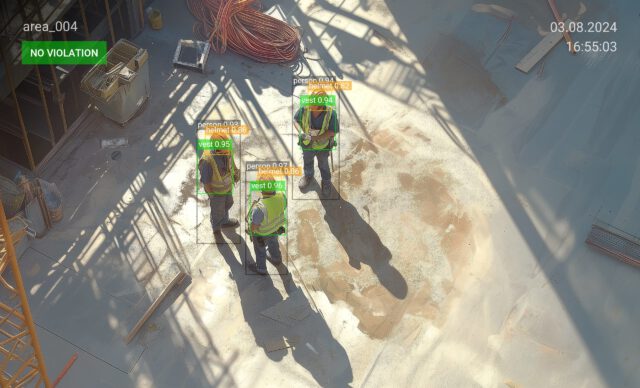
Agentic computer vision changes that. When something is detected, the system does not stop at the observation. It asks what should happen because of this and then makes it happen, with minimal human input.
That might mean routing an alert to the right supervisor with context already attached. Logging the event in an EHS system. Triggering a workflow in a WMS. Sending a notification to a contractor. All of it without a person in the middle of the loop.
What Makes a Vision System Agentic?
Three capabilities need to be present for a vision system to be genuinely agentic:
- Reasoning, not just detection. The system needs to understand what it is seeing well enough to make a decision. Detecting a person in a restricted zone is detection. Understanding that the person has been there too long, that no access record exists, and that the supervisor has not been notified, and acting on all three, is reasoning. Large vision models make this level of understanding possible in a way that narrow trained models could not.
- Workflow integration. Agentic action requires somewhere to act. An agentic vision system connects to the downstream tools operations actually run on: EHS platforms, WMS software, communication systems, and ticketing workflows. Without those integrations, the system can decide what should happen, but cannot make it happen.
- Closed-loop operation. An agentic system does not fire-and-forget. It runs a continuous cycle: detect, reason, act, measure, adapt. The outcome of each action feeds back into the system. Over time, response times improve, false positives drop, and the system becomes more useful the longer it runs.

Why Agentic Computer Vision Is Happening Now
Agentic computer vision has become a serious enterprise conversation for two reasons that have arrived at the same time.
Model Capability
Large vision models now understand context, behavior, and situations in ways that narrow-trained models could not. An agentic system built on a model that only recognizes predefined objects has a hard ceiling on what it can reason about. A system built on a large vision model has no such ceiling.
Infrastructure Maturity
The integration layer (APIs, pre-built connectors, edge deployment architecture) now exists at a level that makes closed-loop operation practical to deploy. These two changes arriving together are what make agentic computer vision real rather than theoretical.
Agentic Computer Vision in Practice
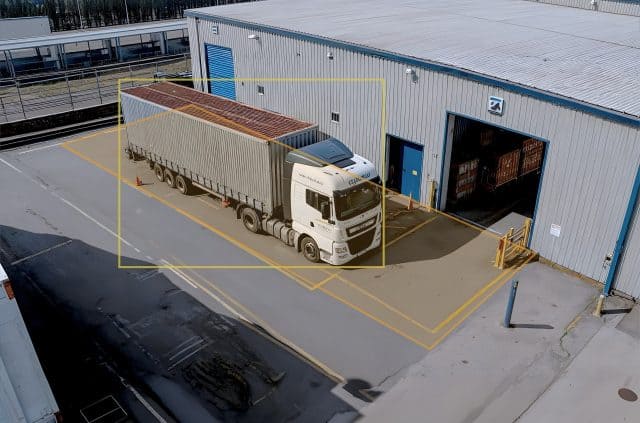
A safety event is detected on a production line. A guard rail has been displaced. The system identifies who is in that area, routes a priority alert to the relevant supervisor with a timestamped video clip, logs the event in the EHS system or other external tools, and flags the line for inspection before the next shift.
Total human involvement: reviewing the alert and approving the inspection. Everything else happened automatically, in seconds. That is agentic computer vision. Not a faster alert, but a completed, AI-powered workflow.
The Shift That Is Actually Happening
For most of the last decade, the question was whether the AI model was good enough to perform tasks in the real world. Could it detect accurately? In enough conditions? At sufficient speed? Those questions are largely answered. The question now is whether the intelligent system is connected deeply enough to the business to perform complex tasks based on what it sees.
We predict that the benefits of agentic AI will rapidly outpace the investment in AI capabilities of the last decade. This is not because the technology is the most sophisticated, but because it is the first to close the loop between what AI can see and what a business can actually do about it.
Read more: What We’ve Learned from a Decade of Computer Vision