

Automatic number plate recognition has moved from a niche traffic tool into one of the most widely deployed forms of applied computer vision. ANPR systems read vehicle registration plates from live camera feeds, convert them into structured text, and hand that output to whatever operational system needs it next. Toll collection, intelligent parking, journey time analysis, and law enforcement investigations all run on the same underlying pipeline.
What has changed recently is the layer sitting above that pipeline. Reading a plate is now the easy part. The harder work involves reasoning over plate data across sites, cameras, and time, which is where agentic computer vision is beginning to reshape how these deployments are designed. In this article, we cover:
- What ANPR is and how it differs from ALPR
- How ANPR works to identify vehicles in real time
- The core techniques behind plate data extraction
- Benefits, use cases, and data protection considerations
What Is ANPR?
Automatic Number Plate Recognition (ANPR) is a technology that applies optical character recognition to images captured of vehicle registration plates in order to read the registration number as text. A complete system combines image processing, detection models, and character recognition to identify vehicles automatically across one or many camera streams.

Bring a new AI vision application to life.
ALPR and ANPR Describe the Same Pipeline
ALPR, automatic license plate recognition, is the term used more commonly in North America. ANPR is the European and UK convention. The vocabulary differs; the engineering does not. Both refer to the same sequence of detection, normalization, and character recognition, and both have benefited from the same shift toward deep learning models that tolerate poor lighting, motion blur, and unusual plate formats.
ANPR System Types
| Type | Where It Sits | Typical Use |
|---|---|---|
| Fixed | Mounted at a permanent location such as a gate, gantry, or booth | Toll collection, site access control, parking lot entry and exit |
| Mobile | Vehicle-mounted, scanning plates while moving | Patrol units checking for stolen vehicles, mobile enforcement sweeps |
How ANPR Works to Identify Vehicles in Real Time
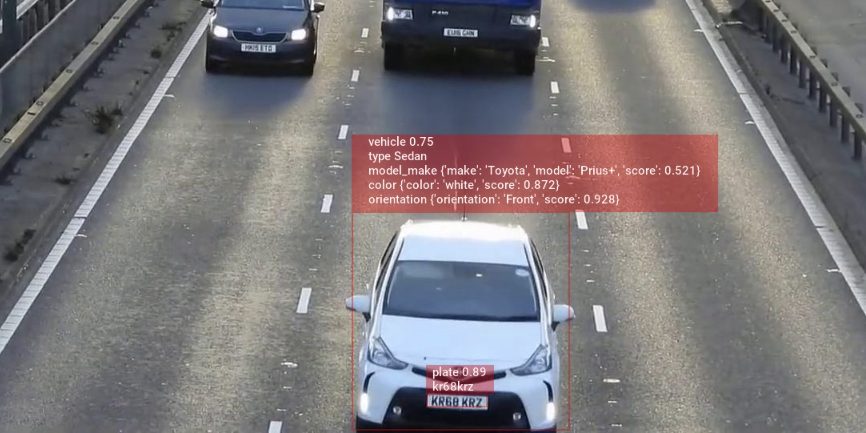
A typical deployment includes ANPR cameras, a processing unit at or near the edge, and a set of video analytics models. The sequence runs as follows:
- Video input and image acquisition. The camera captures a stream containing one or more plates. Infrared illumination is commonly used so that performance holds at any time of day, including overnight.
- Detect and crop the plate. An object detection model locates the vehicle, then the plate region is localized inside that bounding box, usually by finding areas of strong contrast. The crop is then sharpened, deskewed, and normalized.
- Extract and read the characters. OCR converts the cropped region into text. Character sets can be tuned per country, which allows one platform to serve fleets and sites across multiple jurisdictions.
- Act on the result. The recognized string is written to a database, matched against whitelists or watchlists, and passed to billing, security, or parking management systems.
Latency matters here. Plates on motorways are read at high speeds, which leaves a narrow window for capture, inference, and decision. Running inference locally through edge computing removes the round trip to a central server and keeps footage on site.
The Core Techniques Behind Plate Data Extraction
Real-Time Object Detection
Object detection models classify vehicles by type, including buses, trucks, vans, cars, and motorcycles, before any plate is read. Modern single-stage detectors handle this efficiently enough to run on embedded hardware. Pairing detection with object tracking means a single vehicle produces one record rather than dozens of duplicate reads.
Image Processing
ANPR operates in unforgiving conditions: rain, glare, low sun, partial occlusion, and inconsistent mounting angles. Traditional image processing corrects for much of this before the recognition stage. OpenCV remains the most widely used library for these operations.
Optical Character Recognition
Optical character recognition (OCR) is the step that turns pixels into a plate string. Engines detect individual alphanumeric characters, validate the sequence against expected regional formats, and output text with a confidence score. Research on end-to-end recognition, including work published on robust real-time ALPR using YOLO-based detectors, shows how tightly detection and recognition are now coupled. Where formats are highly standardized, template matching and pattern recognition still add a useful validation layer.
Recognition accuracy is set long before inference. Camera placement, lens choice, illumination, and vehicle approach angle determine the quality of the images captured, and no model recovers information that was never in the frame.
Where Agentic Computer Vision Changes ANPR
Conventional ANPR answers one question per frame. Agentic systems answer questions across many frames, cameras, and days. Instead of a fixed rule firing an alert, an agentic layer can correlate plate data with dwell time, vehicle class, and site context, then decide what warrants human attention.
That shift matters for operations teams drowning in alerts. A yard operator does not need a notification every time an unrecognized van appears. They need to know that the same unrecognized van has entered outside scheduled hours three times this week. Vision language models make this kind of querying practical, and Edge AI keeps it running without shipping video off-site.

Benefits of Automatic Number Plate Recognition
- Automation. Plate reads trigger barriers, billing, and alerts without an operator in the loop.
- Accuracy. Well-configured systems read license plate numbers consistently across shifts and weather conditions.
- Analytics. Aggregated reads feed traffic management dashboards, congestion modelling, and demand planning for intelligent transportation systems.
- Access control. Registered plates act as credentials at depots, secure yards, and staff car parks.
- Cost-efficiency. Large volumes are processed without manual checking, which shortens queues and reduces staffing pressure.
- Scalability. Distributed architectures built on AIoT extend from a single gate to a national estate.
- Versatility. The same capability supports parking, security, enforcement, and logistics optimization.
Popular Use Cases
Law Enforcement
Police forces use ANPR to confirm registration status, flag stolen vehicles, and locate cars linked to active investigations. Because matching happens in real time, a hit can be actioned while the vehicle is still nearby.
Parking and Access Management
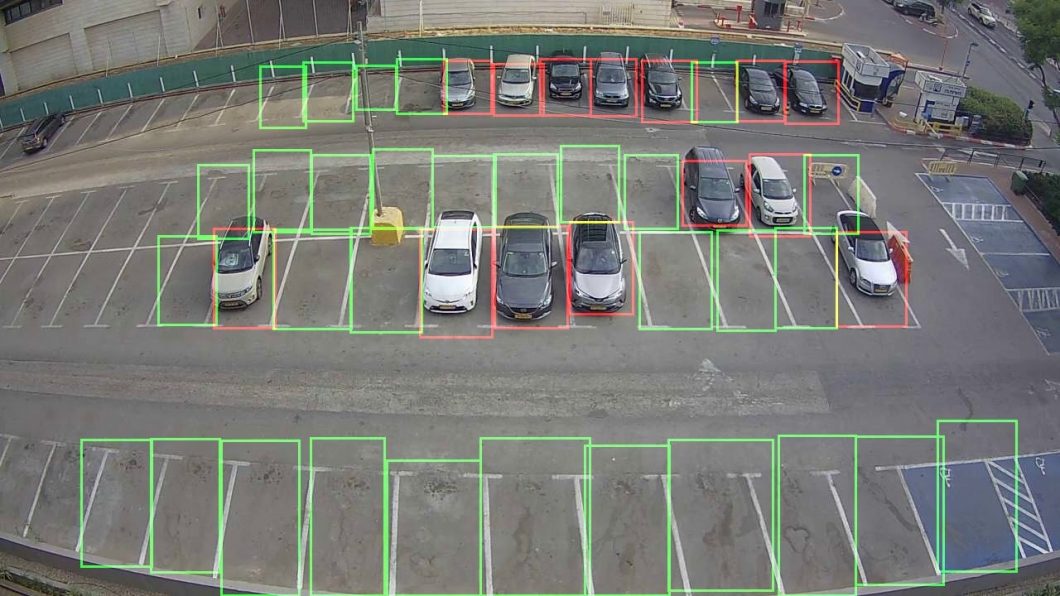
Ticketless entry works because every vehicle is identified on arrival and departure. Combined with parking lot occupancy detection, operators get both identity and availability from the same camera estate.
Toll Collection and Traffic Management
Free-flow toll collection removes the need to stop, supports dynamic road pricing, and cuts queueing emissions. At network scale, the same reads support journey time analysis and route planning across transportation and smart city programmes.
Site Security
Retail parks, industrial estates, and construction compounds use ANPR to confirm that only authorized vehicles are present, which links naturally into wider surveillance and security workflows.
Data Protection and Governance
Plate data is personal data in most jurisdictions, and treating it casually creates real exposure. Retention periods, access logging, and lawful basis all need to be settled before deployment rather than after. In the UK, the National ANPR Standards for Policing and Law Enforcement set out how reads should be stored and accessed, and comparable expectations apply commercially under GDPR and the EU AI Act.
On-premise processing narrows the problem considerably. When recognition happens at the edge and only structured results leave the site, the volume of retained imagery drops sharply.
Techniques such as face blurring and role-based access help keep secondary detail out of scope. Viso Suite handles these controls at the platform level, documented in our privacy and security overviews.